Skip to content
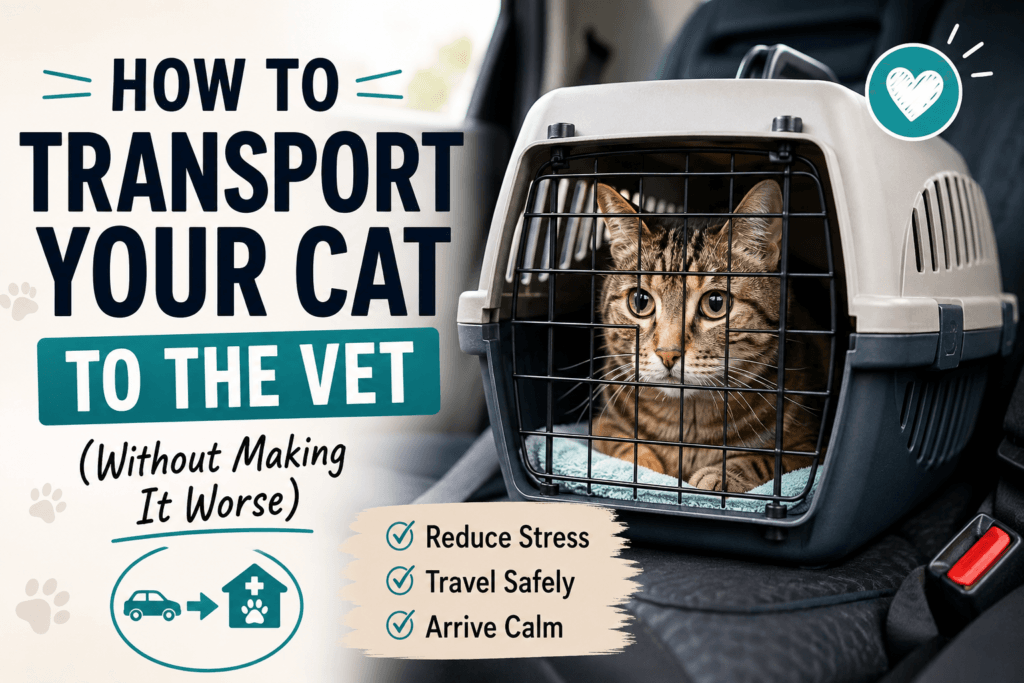
How to Transport Your Cat to the Vet (Without Making It Worse)
Transporting a cat to the vet is one of those life skills you hope you never need until you do. And when you do need it, everything feels urgent. You might be worried about the medical issue, but you also have a second job: getting your cat safely and calmly into the carrier, into the car, and into the clinic without turning the trip into a stressful ordeal for both of you.
From experience, the cat part is usually the limiting factor. Not because you lack effort, but because cats are incredibly sensitive to how they feel about the carrier, the car, and the handling you do in between.
In this guide, I will walk you through the exact steps that work best in real life: preparing the carrier, choosing the right carrier approach, loading and locking safely, managing the car ride, and arriving at the clinic. I will also include a practical affiliate reference for a carrier style that many owners can use successfully:

- Hard sided pet carrier with 2 doors for front and top entry; suitable for cat or medium size dog weighing 12 – 20 pounds
- Durable plastic construction with steel wire doors; screws keep the top and bottom sections securely connected
- Spring load latches ensure easy one-handed door opening and closing; top door swings open to the left or right and inclu…
Quick transparency. You did not provide product-specific testing notes beyond the general listing information, so I am not promising outcomes. I am using the link as an example of a sturdy, travel-ready carrier category many people find useful when transporting cats.
Step 1: Treat the carrier like a home base, not a punishment
The biggest reason cat transport goes sideways is the carrier becomes associated with discomfort. If your cat only sees the carrier on vet day, they tend to fight you getting them in it. If your cat sees the carrier as neutral or even safe, loading gets dramatically easier.
How to prep your cat and your carrier
- Place the carrier in your home for several days or weeks before the appointment
- Leave the door open
- Put a familiar blanket or a towel inside that smells like home
- Consider adding a small amount of catnip if your cat responds to it
- Reward your cat for approaching or entering calmly
Use case example: If your cat already tolerates the carrier, you can practice just one short “door closed” moment when you are home and calm. That single step helps your cat learn the door closing is not an end of the world.
Pros and cons of different carrier strategies
- Pros: carrier prep reduces struggle, stress, and scratching at loading
- Cons: it takes time, so plan early if you can
If you only have one day to prepare, do the same steps, just compress them: allow access, add the familiar blanket, and do not force. Your goal is calm familiarity.
Step 2: Pick a carrier that works for loading and safety
A good cat carrier does two things extremely well:
1) It allows you to load securely without wrestling
2) It prevents escape during bumps, vibrations, and clinic doorways
What I look for in a cat carrier
- Secure doors that latch reliably
- Two entry points if possible, because cats do not always cooperate with one loading direction
- Hard sides if your car has tight corners or you need to protect the cat from crushing
- Good ventilation so your cat is not overheated
- Enough space for your cat to stand and turn comfortably
One carrier type that fits many cat transport needs is a sturdy portable hard sided carrier with ventilation and both front and top entry options. That style is represented by this affiliate reference: https://amzn.to/3QFUWV2.
Hard sided vs soft sided: my practical comparison
Hard sided carriers
- Pros: better structural stability, harder for claws to tear, safer during car bumps
- Cons: can feel more “confined” if your cat hates the carrier
Soft sided carriers
- Pros: sometimes easier for anxious cats to accept, lighter to carry
- Cons: can be harder to prevent escape if your cat panics, less protective in a bumpy car
If your cat is the type to panic or scratch when frightened, hard sided usually reduces risk.
Step 3: Handling basics that reduce panic
How you approach matters as much as what you put your cat in.
Loading method that is usually safest
- Keep your voice low and calm
- Dim lights if your cat responds to light stress
- Place the carrier where your cat already wants to be
- Use a towel only as a last resort, and never as a way to “throttle” your cat
What to avoid
- chasing your cat around the house
- grabbing the scruff aggressively
- trying to pull a fully resistant cat into the carrier without guidance
- holding the cat loose and letting them wriggle free
Use case example: When I see owners fail, it is usually because they try to “win the wrestling match.” The carrier loading works better when you create a short path to entry and let the cat choose to move forward.
If your cat bolts or hides
Stop trying to catch them in the moment. Instead:
- close the doors to limit movement
- bring the carrier to the hiding area
- speak softly and wait for curiosity
- use treats near the carrier entrance to guide movement
If you must use gentle towel support to move a cat that is extremely panicked, focus on minimal restraint and quick secure placement. Then stop handling and let your cat settle in the carrier.
Step 4: Lock the carrier and plan where it sits in the car
Once the cat is inside, secure the doors. Then think about how the carrier will behave in your car.
Best positioning in the vehicle
- Place the carrier on the seat where it is supported and stable
- Avoid putting it on the floor where it can tip during braking
- If you can, keep it buckled or placed so it cannot slide
- Do not let the carrier move freely around the cabin
Temperature and ventilation
- Keep the car cool enough to avoid overheating
- Avoid blasting air directly at the cat
- If your cat reacts to noise, reduce loud fan settings
Pros: stable carrier placement reduces motion stress
Cons: an unsecured carrier can become an escape or injury risk during stops
Step 5: Reduce scent and sound triggers
Cats react strongly to smells. If your cat is already nervous, you want fewer additional irritants.
Quick pre trip checklist
- avoid perfume or heavily scented products on your hands
- wipe any strong cleaner smells off the carrier area
- keep the windows consistent and avoid smoke exposure
- don’t bring strong air fresheners into the car
Use case example: If your cat hates the carrier but tolerates it when the blanket smells familiar, keep that blanket consistent. Smell familiarity is often what calms the whole journey.
Step 6: Prepare the clinic arrival like a pro
Arrival is usually the second hardest moment. The clinic is louder, there are smells, and a new handling rhythm begins.
What helps at the front desk
- Have the carrier ready as soon as you park
- Keep the cat inside, do not open the carrier door unless instructed
- Carry the carrier close to your body
- Speak calmly to staff so the transfer is quick and controlled
At the exam room
- Place the carrier on the floor or exam table only if staff allows it
- Avoid opening the carrier door unless the vet instructs you
- If you remove the cat from the carrier for the exam, do it in a way that minimizes wriggling and escape
Many clinics prefer cats stay in carrier as much as possible for safety. Follow their workflow.
Step 7: Pros and cons of “comfort hacks” like towels, pheromones, and treats
People want to help. Sometimes they overdo it. Here is a balanced view of what can help and what can backfire.
Comfort aids that often help
- familiar blanket inside the carrier
- treats offered before loading
- quiet voice and dim lighting
- minimizing handling during the trip
Comfort aids to use carefully
- pheromone sprays or wipes: can help some cats, but do not expect miracles and test once at home if possible
- sedatives: only use under veterinary guidance
Towel method
- pros: can prevent sudden escape when a cat is panicked
- cons: can increase panic if done roughly
If you use a towel, keep it brief and focus on safe placement, then stop.
Mid article recommendation: keep your setup consistent
If you are currently shopping for or comparing carriers, consistency matters more than perfection. A sturdy hard sided carrier with ventilation and secure latching helps you avoid last minute scrambling and reduces the chance that your cat can wriggle free.
This is one example of the kind of carrier design many owners find practical for cat vet transport: https://amzn.to/3QFUWV2. Use it as a reference for what features to prioritize, secure doors, ventilation, and practical entry points.
Step 8: Special situations that need extra planning
Kittens
Kittens often tolerate carriers better if you start early. Still, practice loading with treats. Avoid waiting until the first vaccine appointment to introduce carrier stress.
Senior cats
Senior cats can be less tolerant of jostling. Make sure:
- the carrier is stable
- you avoid sudden lifts
- you keep the trip smooth and direct
Cats with known panic
If your cat panics repeatedly during transport:
- prep the carrier well in advance
- use consistent blankets
- plan extra time so you do not rush
- request a calmer handling approach from the clinic if possible
Step 9: A simple packing list for vet day
You do not need to bring everything. But these items cover most real scenarios:
- cat carrier with clean familiar blanket
- small bag of treats
- a towel in case you need gentle support
- water for travel if the vet recommends it, many times it is not necessary during short trips
- any paperwork and medications
- a phone number for the clinic so you can confirm check in procedure
Use case example: if your cat drools or sweats from stress, a towel can make the transfer safer and cleaner.
Conclusion: the easiest “fix” is preparation and calm control
Getting your cat to the vet is not about overpowering them. It is about reducing triggers, creating familiarity, and making loading and transport safe.
Your best approach is:
1) prepare the carrier as a home base
2) choose a secure, ventilated carrier that supports easy loading
3) handle calmly and minimize wrestling
4) secure the carrier in the car and manage temperature
5) arrive with the carrier ready and keep your cat inside
6) plan for special cases like seniors or panic prone cats
If you want a practical carrier reference while you confirm features for your own setup, the affiliate listing I mentioned earlier is here again:
- Hard sided pet carrier with 2 doors for front and top entry; suitable for cat or medium size dog weighing 12 – 20 pounds
- Durable plastic construction with steel wire doors; screws keep the top and bottom sections securely connected
- Spring load latches ensure easy one-handed door opening and closing; top door swings open to the left or right and inclu…
Now do the next right thing: pick a carrier that latches securely and ventilates well, place it where your cat will naturally approach it, and practice for just a few minutes each day before your next appointment. That is how you turn vet day from a battle into a routine.
Table of Contents
- How to Transport Your Cat to the Vet (Without Making It Worse)
- Step 1: Treat the carrier like a home base, not a punishment
- Step 2: Pick a carrier that works for loading and safety
- Step 3: Handling basics that reduce panic
- Step 4: Lock the carrier and plan where it sits in the car
- Step 5: Reduce scent and sound triggers
- Step 6: Prepare the clinic arrival like a pro
- Step 7: Pros and cons of “comfort hacks” like towels, pheromones, and treats
- Mid article recommendation: keep your setup consistent
- Step 8: Special situations that need extra planning
- Step 9: A simple packing list for vet day
- Conclusion: the easiest “fix” is preparation and calm control
- Check Out My YouTube